Test Equipment – Sales & Service – Rent – Lease

01.
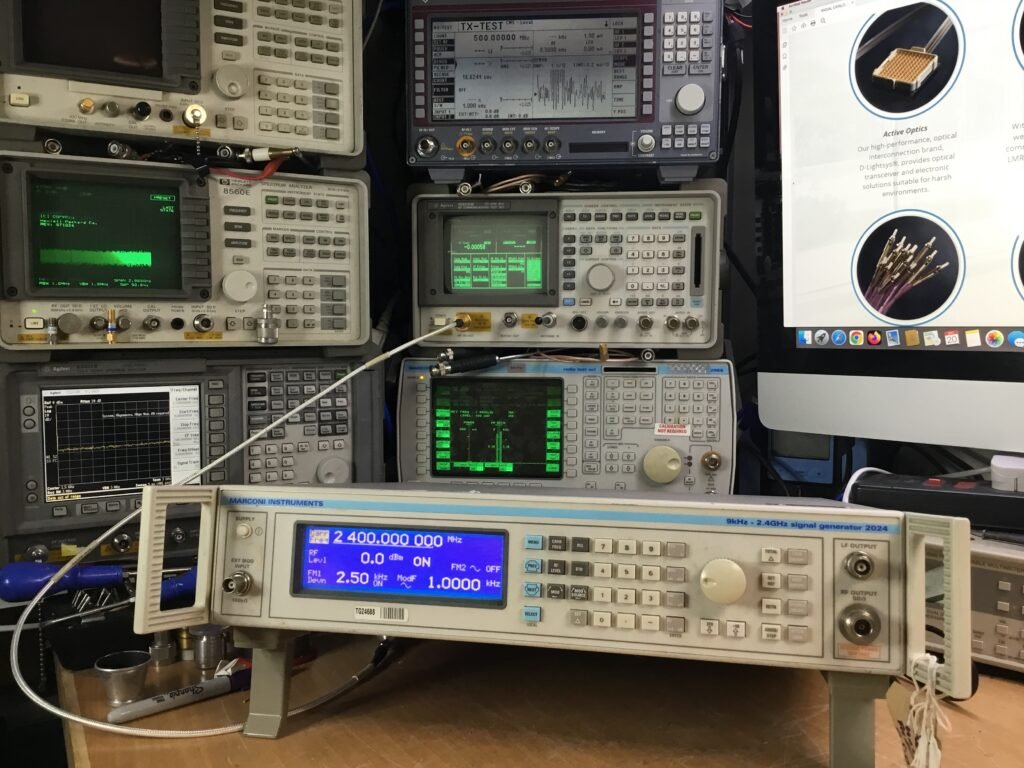
Radio Comms Test Sets, Spectrum Analysers, Sig Gens.
From Marconi Instruments to Rohde & Schwarz, Anritsu, Agilent, HP, Aeroflex, IFR & Motorola we have it all.
02.
RF POWER METERS
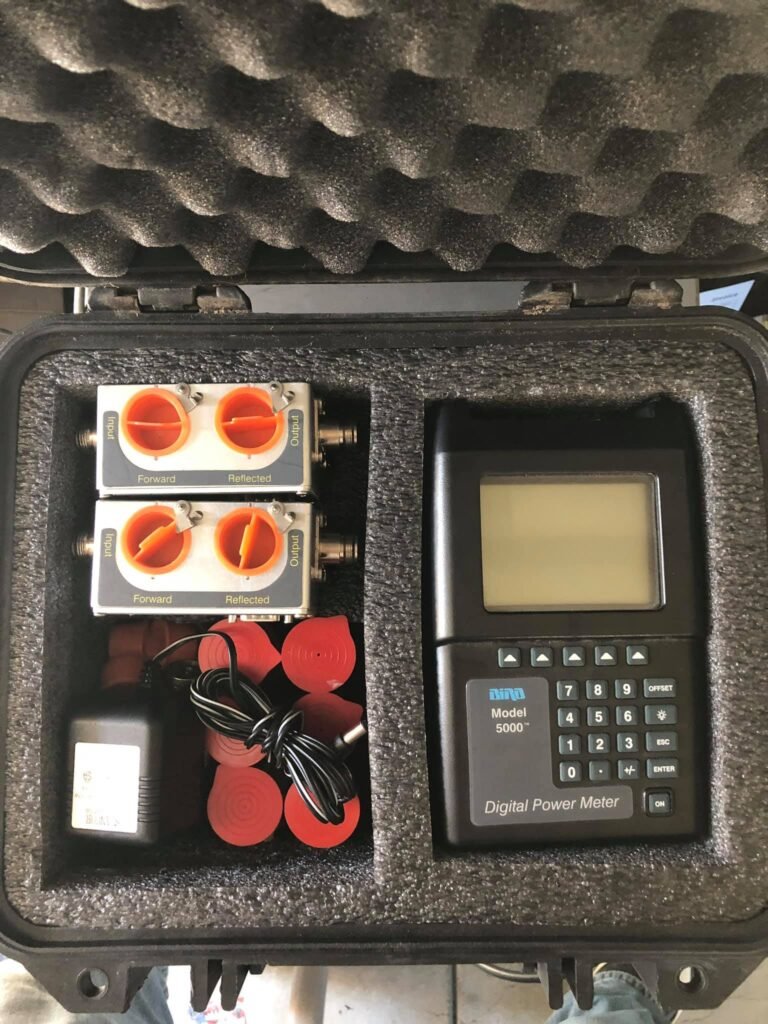
We Stock Bard 43 models with or without SSB Peak Reading Kits to measure AM, FM, USB LSB, CW, We have Rhode & Schwarz heads & Marconi heads for VSWR Foward & Reflected Power measurments. We also have Bird 500EX models for TETRA, DMR, & P25 & Radar pulse measurments. Equally for the microwave RF spectrum we stock Marconi power sensors capable of measuring RF power to 46GHZ. We have a range of RF power measuring accessories such as Bird slugs for a wide frequency & power range inc Broadcast specific range. Directional couplers, Attenuators & Terminations.
03.
Attenuators
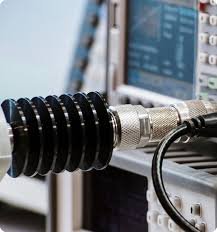
We Stock Fixed & Variable Step attenuators from DC to 46GHz from leading manufacturers like Narda, MaCom, An RF (radio frequency) attenuator is essentially the volume control knob for radio waves. It reduces the power of an RF signal without significantly distorting its waveform.
While it might seem counterintuitive to deliberately weaken a signal, attenuators are critical for protecting equipment, preventing distortion, and ensuring accurate measurements.
Here are the primary use cases for RF attenuators across testing, commercial, and defense applications:
1. Protecting Sensitive Test Equipment
The most common use case is power reduction to safeguard expensive diagnostic tools like spectrum analyzers, network analyzers, and power meters.
The Problem: If you hook a high-power transmitter (like a cellular base station or a radar module) directly into a spectrum analyzer, you will instantly fry the instrument’s sensitive front-end mixer.
The Solution: Placing a fixed attenuator (often called a “pad”) between the transmitter and the analyzer drops the power to a safe, measurable level.
2. Preventing Receiver Oversaturation (Clipping)
Just like a loud noise can distort a microphone, a high-power RF signal can overwhelm a receiver, causing a phenomenon known as saturation or clipping.
The Problem: When a receiver saturates, it introduces severe harmonic distortion, intermodulation, and bit errors, rendering the data unreadable.
The Solution: Attenuators degrade the signal just enough to bring it back into the receiver’s dynamic range—the sweet spot where it can cleanly process the signal.
3. Impedance Matching and Reducing VSWR
In RF circuits, energy needs to flow smoothly between components. If there is an impedance mismatch (e.g., a 50-ohm cable hitting a 75-ohm component), the signal bounces back, creating Voltage Standing Wave Ratio (VSWR) issues and reflections.
Adding a small attenuator (like a 3 dB pad) before a mismatched load acts as a buffer.
The reflected wave has to pass through the attenuator twice (once going in, once bouncing back), which drastically reduces the reflected energy and stabilizes the impedance seen by the source.
4. Simulating Signal Fading and Distance
When engineers design wireless devices (like Wi-Fi routers or 5G smartphones), they need to know how the device performs when it’s far away from a cell tower.
Instead of walking miles into a field, engineers use programmable or variable RF attenuators in a lab.
By stepping up the attenuation, they can simulate distance, walls, and atmospheric fading in real-time to test the limits of the receiver’s sensitivity.
5. Automatic Gain Control (AGC) Loops
In dynamic environments—like a moving car receiving satellite radio—the incoming signal strength constantly changes.
04.
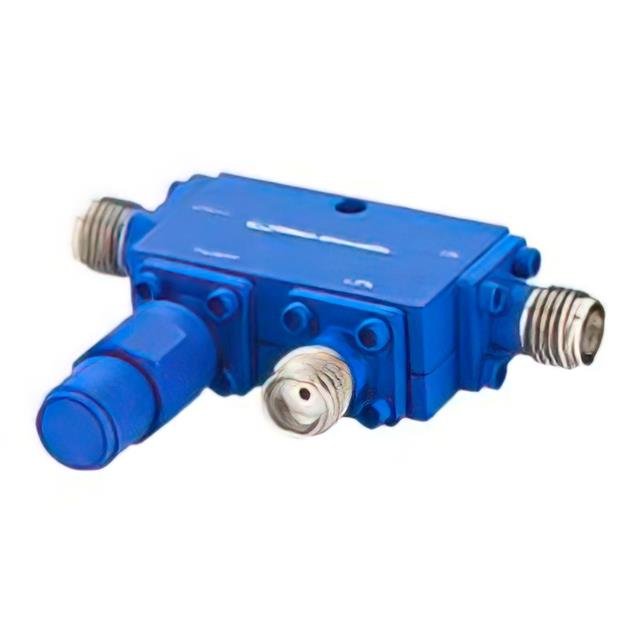
Directional Couplers
UNDER DEVELOPMENT